

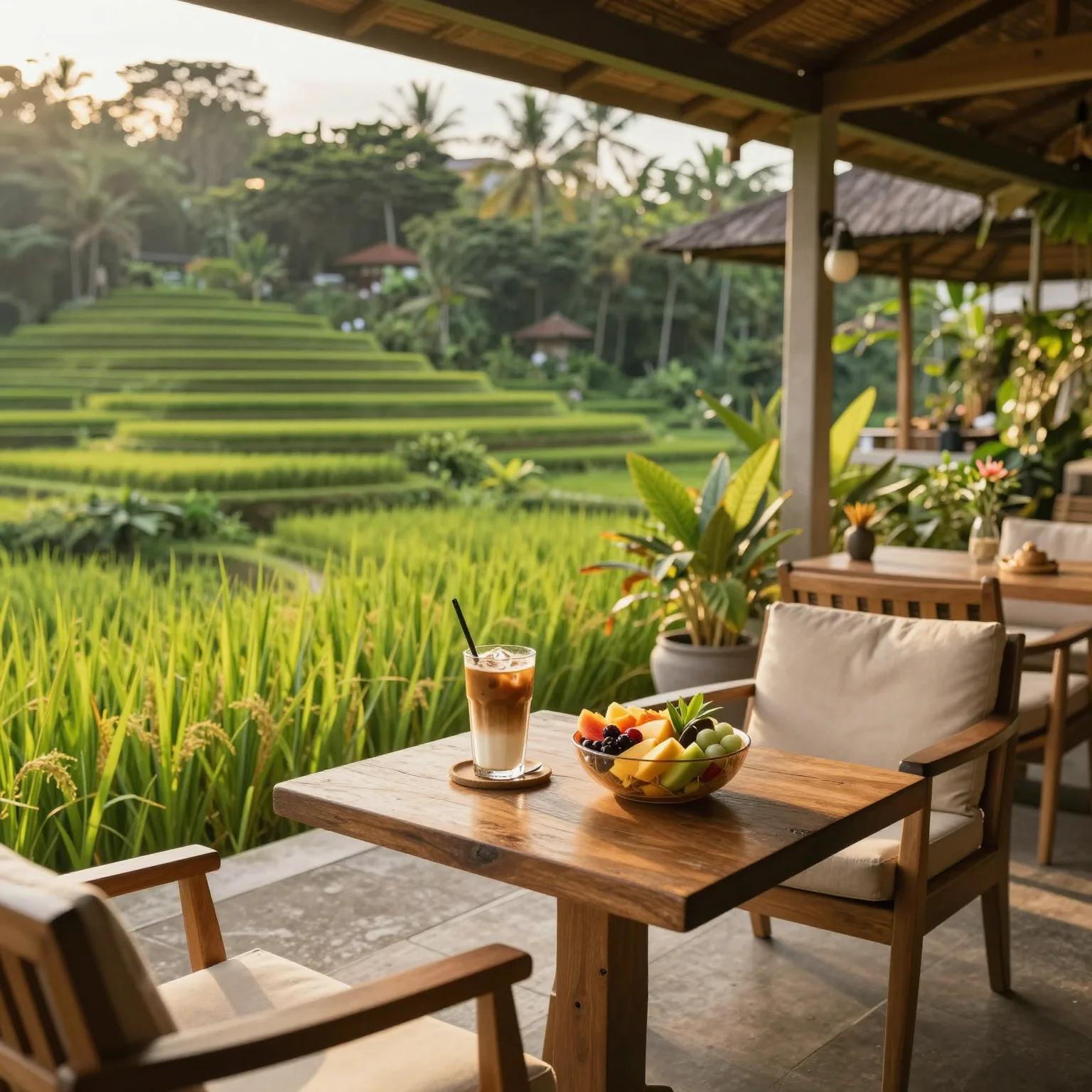
If Bali usually means beach clubs, packed streets, and constant motion to you, Ubud changes the mood fast. In the middle of the island, about an hour from Canggu or Seminyak when traffic behaves, you get a softer side of Bali, one with jungle views, yoga studios, organic food, and the calm energy that made Eat, Pray, Love famous.
This is the kind of day that reminds you why Bali keeps pulling people back. You slow down, follow your cravings, meet kind strangers, and let Ubud set the pace for you.

Why Ubud feels different from the rest of Bali
A lot of Bali can blur together if you’ve visited more than once. You know the pattern, beach clubs, traffic, busy cafe strips, and quick detours to quieter coastal corners when you need a break. Ubud gives you something else.
Right away, the rhythm changes. You trade the coast for inland greenery, and you stop trying to tick off every major sight. Instead, you let the day unfold around simple pleasures, good coffee, a long walk, a favorite lunch spot, and little chats with people you meet along the way.
That slower pace is the point. Ubud is often called Bali’s spiritual side, and even if you’re not coming for healers or rituals, you still feel it. The town has a softer pull. You see yoga studios beside rice fields, cafes built for lingering, and streets that can swing from chaos to calm within a few minutes.
It’s also the right setting for a celebration that doesn’t need a party. A 300,000-subscriber milestone fits better with a “dream day” than a big event. You can feel that energy throughout the day, because the focus stays on what makes you happy, not what looks impressive on a checklist.
Ubud works best when you stop chasing the perfect itinerary and let the day breathe.
Starting slowly with coffee and breakfast in Ubud
The morning begins the way a good Ubud morning should, with coffee and zero rush. At this point, the coffee order has already become a habit. A matcha latte or a flat white with oat milk has been the safe choice for the last couple of days, and both have been good enough to repeat.
Still, this is the kind of day when you try something new. The recommendation is a Sunday latte with oat milk, and it turns out to be one of those drinks you remember after the trip. The cream cheese part sounds risky at first, but the flavor lands in exactly the right place. It’s sweet, salty, creamy, and rich without turning heavy. The closest comparison is salty cheesecake folded into coffee.
Then breakfast arrives, and it steals the show.
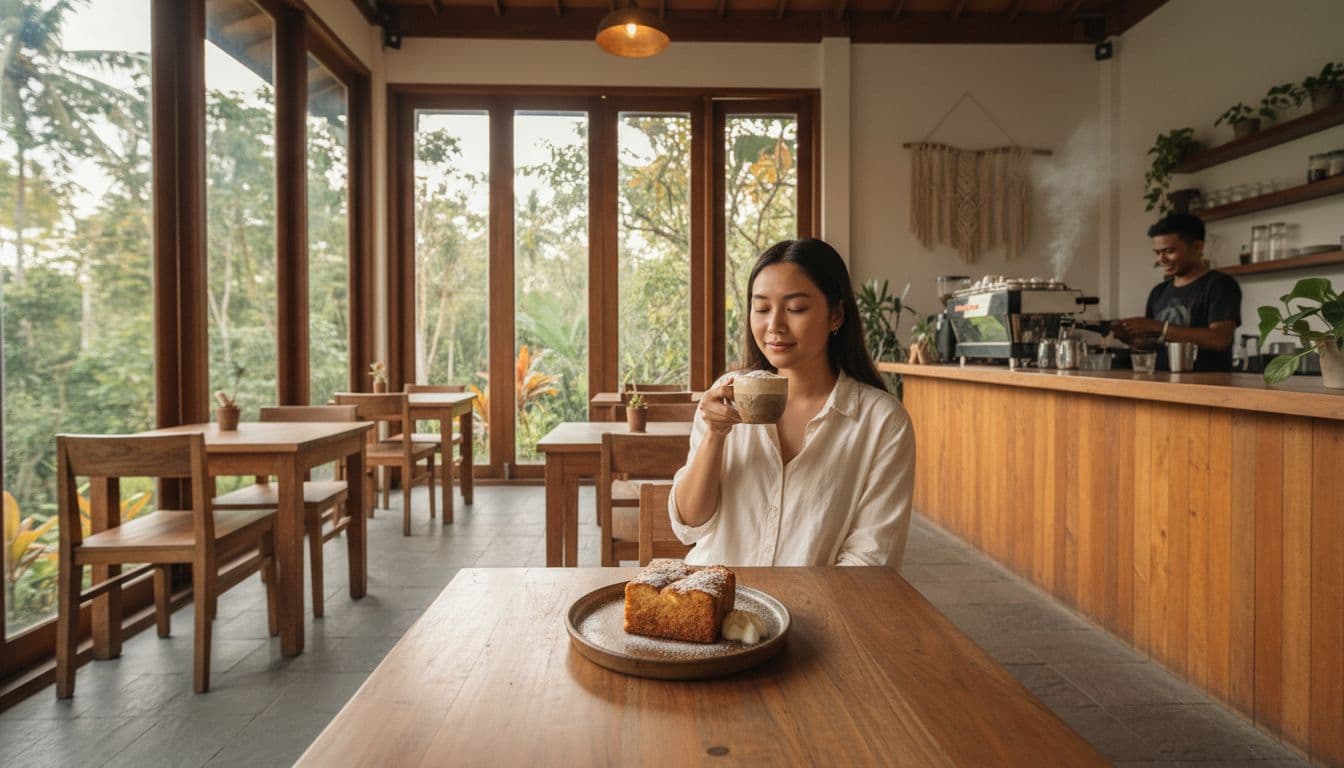
Grandma’s bread pudding has already been sitting in your head for two days, thanks to a photo on display, and it lives up to the build-up. The texture is soft in the best way, closer to a tender cinnamon bun than a heavy dessert. Even better, it doesn’t drown in sugar. You get comfort without the overload.
A few standouts from that breakfast stop deserve a quick mention:
- The Sunday latte with oat milk tastes sweet, salty, and creamy, with a cream cheese flavor that stays balanced.
- Grandma’s bread pudding is soft, warm, and comforting, with a texture that feels bakery-fresh.
- The whole stop works because the staff are welcoming and relaxed, which matters when you’re traveling on your own.
That last part becomes clear when a casual chat starts with another content creator filming nearby. She’s from Queensland, she’s making Instagram content, and the conversation is easy from the first minute. That’s one of the best parts of solo travel in Indonesia. Friendly moments seem to find you without much effort.
Sari Organic Walk is the Ubud rice field experience that still feels real
After coffee, it’s time to head toward the rice fields, but not the most crowded version of them. For that, Sari Organic Walk makes a lot of sense.
Getting there is simple if you use Grab. A short ride costs around 16,000 IDR, which is roughly a dollar or two in Australian dollars, depending on the day. Before you travel around Bali like this, it helps to have the app set up with your card, plus mobile data ready to go. If you want an easy setup, this Bali eSIM option makes quick bookings and directions much easier.
One other detail matters here, helmet safety. If you’re hopping on the back of a scooter, take it seriously. The same goes for tipping. Rides can be incredibly cheap for you, but that doesn’t mean the driver earns much from them. Adding a small tip changes that.
Sari Organic Walk feels different from the moment you start. You leave behind a lot of the traffic, and the air opens up. There are far fewer scooters, no cars on the path itself, and more space to take in what is around you. More importantly, the rice paddies here still feel like working land. You see farmers, homes, and local life mixed in with the cafes and guesthouses.
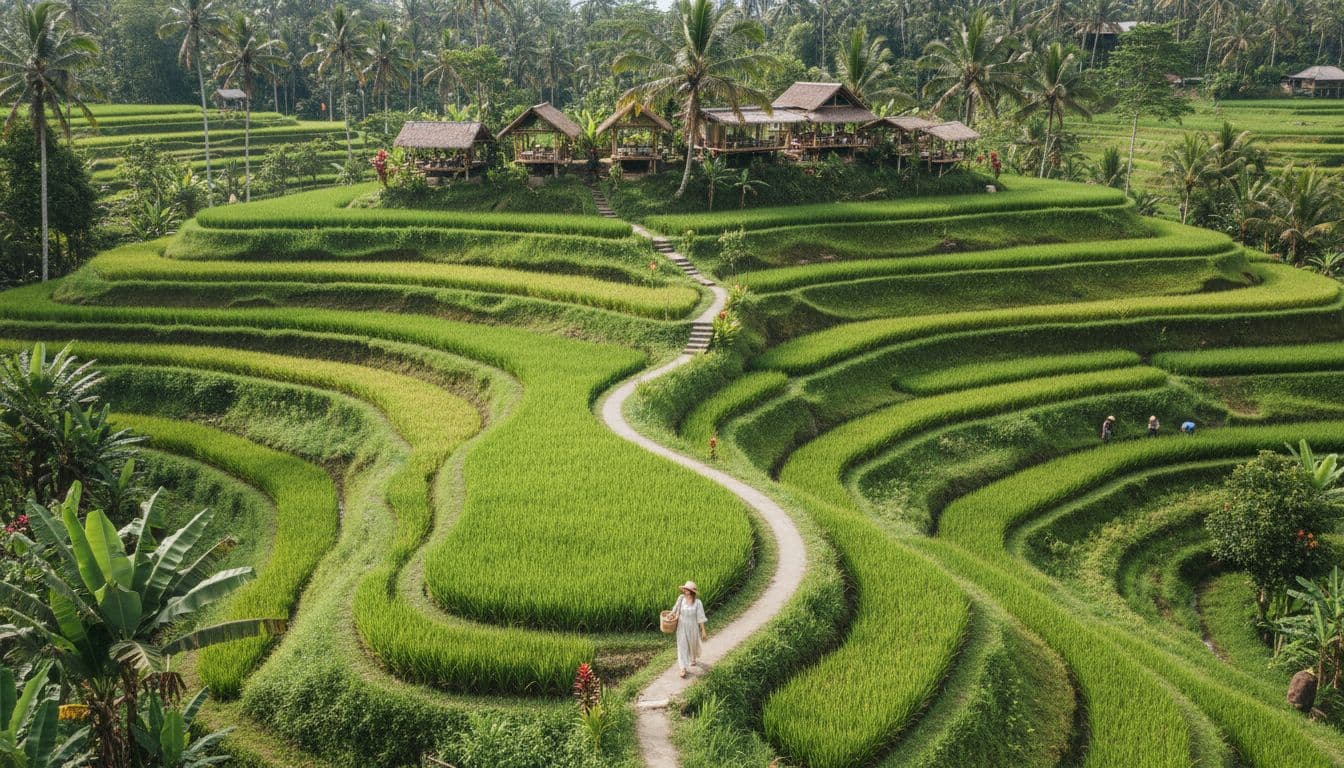
If you’re deciding between Sari Organic Walk and Tegalalang, this quick comparison helps:
| Place | Best for | What it feels like | Best time to go |
|---|---|---|---|
| Sari Organic Walk | A slower walk, cafes, and a more local feel | Calm, open, less staged | Late morning or later in the day |
| Tegalalang Rice Terrace | Famous postcard views | Beautiful, but much busier and more produced | As early as possible, ideally at sunrise |
The takeaway is simple. Do both if you can, but do them differently. Go to Tegalalang at the crack of dawn for the big view, then save Sari Organic Walk for a slower wander when you want to sit, eat, and stay awhile.
Along the walk, you pass cafes overlooking the terraces, a few beautiful places to stay, and activity spots offering painting classes, silver workshops, yoga, and healthy food. One cafe, Pako, looks too tempting to skip, so a coconut coffee goes on the table.
The only problem is expectation. If you’re picturing a thick, icy Vietnamese-style coconut coffee, this version isn’t that. It’s more liquid and mellow, with good coconut and coffee flavor, but it lacks the sweetness and frappe-like chill you might be hoping for. Even so, the setting makes up for it. Sitting above the rice terraces with no fixed plan feels like Ubud at its best.
Lunch at Zest is worth building your day around
After the walk, lunch belongs at Zest. If you know Ubud well, this place probably needs no introduction. If you don’t, it’s easy to see why it becomes a favorite fast.
Zest works as more than a restaurant. It’s the kind of place where you can settle in for hours, eat well, open your laptop, or listen to live music and do nothing at all. The atmosphere is loose and welcoming, and the live performances add to that. Handpan music, soft vocals, and a laid-back crowd make it feel easy to stay longer than planned.
The food gives you a reason to keep coming back. One standout is the Tex-Mex breakfast veggie stack, a plate that packs in far more flavor than the name suggests. You get a corn fritter with a crisp edge, guacamole, and a jackfruit sausage that gives you the satisfaction of a savory breakfast without any meat. The seasoning leans warm and spicy, while the cilantro stays in the background instead of taking over.
A second plate joins it, crispy potatoes with chipotle mayo, and that order makes complete sense the second it lands. The outside is crisp, the inside stays fluffy, and the chipotle mayo does exactly what it needs to do.
A few reasons this stop works so well:
- The Tex-Mex breakfast veggie stack brings crunch, spice, creaminess, and a smart vegetarian twist.
- The crispy potatoes are the kind of side dish that easily becomes the thing you remember.
- If you like smoothie bowls, coffee, or matcha, the wider menu gives you plenty of reasons to come back.
By this point, the slow side of Ubud has done its job. You’ve had the rice fields, the long walk, and the lingering lunch. Then the day swings back toward town.
Central Ubud is noisy, hectic, and still fun to watch
Back in central Ubud, the mood changes again. Traffic thickens. Scooters push through gaps that barely exist. Shopkeepers call out from storefronts. It gets loud, crowded, and a little overwhelming, but there’s still charm in it.
Part of that comes from the people. The Grab driver is warm and chatty. Street vendors are playful without feeling aggressive. Someone wants to show you kimonos, dresses, and jumpsuits. You look, smile, and move on. That easy friendliness is one of the strongest impressions Bali leaves behind.
Then you give in to a craving that has been building for days. A cafe has had a photo out front of a strawberry matcha, and the drink has been impossible to ignore. Once it arrives, you can see why.
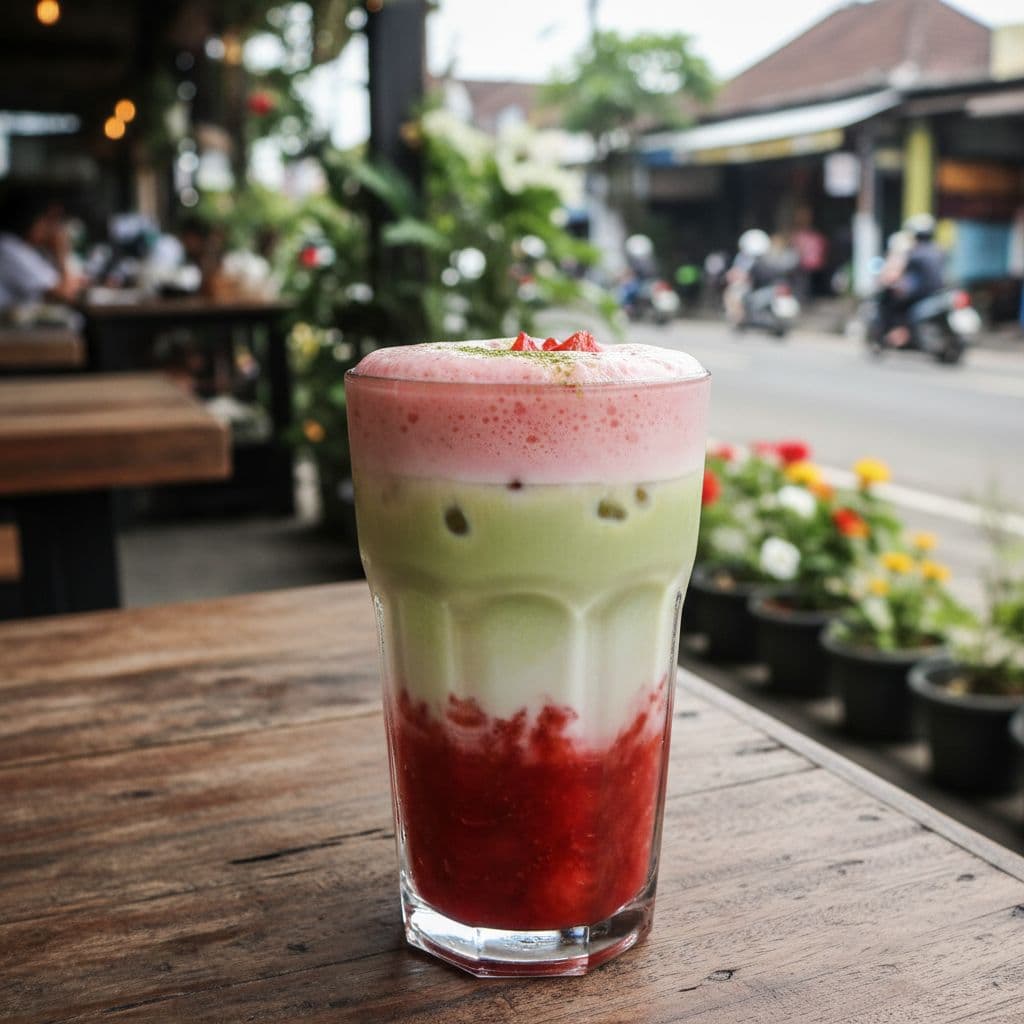
This version comes layered in a tall glass with fresh muddled strawberries at the bottom, matcha and oat milk through the middle, and a strawberry foam on top. It looks playful, and it tastes even better. The foam is sweet and fresh, the strawberry cuts through the earthiness of the matcha, and the whole thing hits that late-day spot when coffee sounds good but sleep still matters.
If you’ve ever had a favorite strawberry matcha in Ubud before, this one sets a new standard. It even beats Mudra, which says a lot if you already know the town’s cafe scene.
There’s also something satisfying about drinking it beside one of Ubud’s busiest streets. The cafe becomes a front-row seat to the mess outside. Traffic barely moves, horns go off, scooters squeeze through, and you can sit there for ages watching it all unfold. At 70,000 IDR, it’s not the cheapest drink in town, but for something this memorable, it fits the day.
And yes, sometimes the best travel choice is the one your 8-year-old self would make without hesitation.
A small jewelry stop and a smart place to stay in Ubud
After the street noise, a quick stop at Kamaya adds a different kind of pause. The jewelry is beautiful, with pieces that feel personal instead of generic. Rings sit around 730,000 IDR to 1 million IDR, and some larger pieces climb higher, including around 2.25 million IDR for a necklace.
That pricing makes sense when you think about what you’re buying. A handmade piece from a local artist carries more meaning than another mass-produced souvenir. If you like taking home something you’ll wear for years, this is a better way to do it.
Later, when the crowds start to drain your energy, heading back to the hotel sounds perfect. Where you stay in Ubud shapes the whole trip, especially if you want to be central without paying for a full luxury resort or getting stuck in a loud hostel.
Savanna Ubud hits that middle ground well. You can book dorms or private rooms, and the private room option gives you comfort without losing the social side of the stay. The property is clean, well-designed, and easy to settle into. Better still, it’s central enough that you can walk to cafes and shops instead of planning every movement around transport.
A few details make it stand out:
- You get a beautiful pool and a restaurant with solid food.
- Breakfast is included daily.
- There’s a free 15-minute massage every day.
- The hotel runs social events, but the mood stays calm and grown-up.
For around AUD 350 to AUD 400 for four nights, including breakfast, it’s a strong value for central Ubud. If that sounds like your style, you can look at Savanna Ubud availability and rates.
Dinner there keeps the day on track. A vegetarian nasi goreng arrives with tempeh, a fried egg, vegetables, satay-style peanut sauce, and acar, the sweet pickled vegetables on the side. The tempeh gives you that nutty bite and slight crunch, while the whole dish stays fresh instead of oily.
Ubud has more waiting for you after this perfect day
Even with all of that, you’ve only seen one side of Ubud. The town has more to offer if you want to stay longer and go further.
You can spend other days chasing waterfalls, visiting temples, or booking one of the wellness experiences the area is known for. Sound healing, Reiki, and traditional Balinese purification ceremonies are all part of the wider Ubud picture. If that side of Bali interests you, this is where you make time for it.
The deeper appeal of Ubud doesn’t come from one big attraction. It comes from the mix of warmth, green space, good food, and stillness that keeps showing up throughout your day.
Why Ubud keeps pulling you back
The best part of Ubud is that a great day there doesn’t need much structure. You need a few good food stops, one beautiful walk, a comfortable place to stay, and enough room in your schedule to notice what’s around you.
That’s why this side of Bali sticks. You leave with more than photos. You leave remembering the rice fields, the kind strangers, the street chaos, the strawberry matcha, and the feeling that slow travel still works when you let it.
FAQ
1. Why is Ubud different from other places in Bali?
Ubud offers a calmer and greener atmosphere compared to Bali’s busy beach areas like Seminyak or Canggu. Instead of beach clubs and nightlife, you’ll find rice fields, yoga studios, wellness retreats, and relaxed cafés surrounded by jungle scenery.
2. What is the best time to visit Ubud rice fields?
Early morning or late afternoon is the best time to visit Ubud’s rice fields. The weather is cooler, the light is softer for photos, and the paths are less crowded.
3. What is Sari Organic Walk in Ubud?
Sari Organic Walk is a peaceful walking path through rice fields located near central Ubud. It offers scenic views, small cafés, local homes, and a quieter alternative to more famous rice terraces.
4. Is Ubud good for solo travelers?
Yes, Ubud is considered one of the best places in Bali for solo travelers. The town has a welcoming atmosphere, many cafés and wellness activities, and it’s easy to meet other travelers.
5. What kind of food can you find in Ubud?
Ubud has a diverse food scene including vegan restaurants, healthy cafés, organic dishes, Indonesian cuisine, smoothie bowls, and specialty coffee spots.
6. Is Ubud expensive compared to other parts of Bali?
Ubud offers options for every budget. You can find affordable local meals and guesthouses as well as luxury resorts and high-end restaurants.
7. Where should you stay in Ubud for a comfortable experience?
Many travelers choose boutique hotels, wellness retreats, or social hostels in central Ubud so they can easily walk to cafés, shops, and attractions.
8. What activities can you do in Ubud besides visiting rice fields?
Popular activities include yoga classes, temple visits, waterfall trips, cooking classes, art markets, sound healing sessions, and traditional Balinese purification rituals.